
Please Move Over, by Susan Dudasik
by Susan Dudasik
Reprinted from the January 2000 Issue
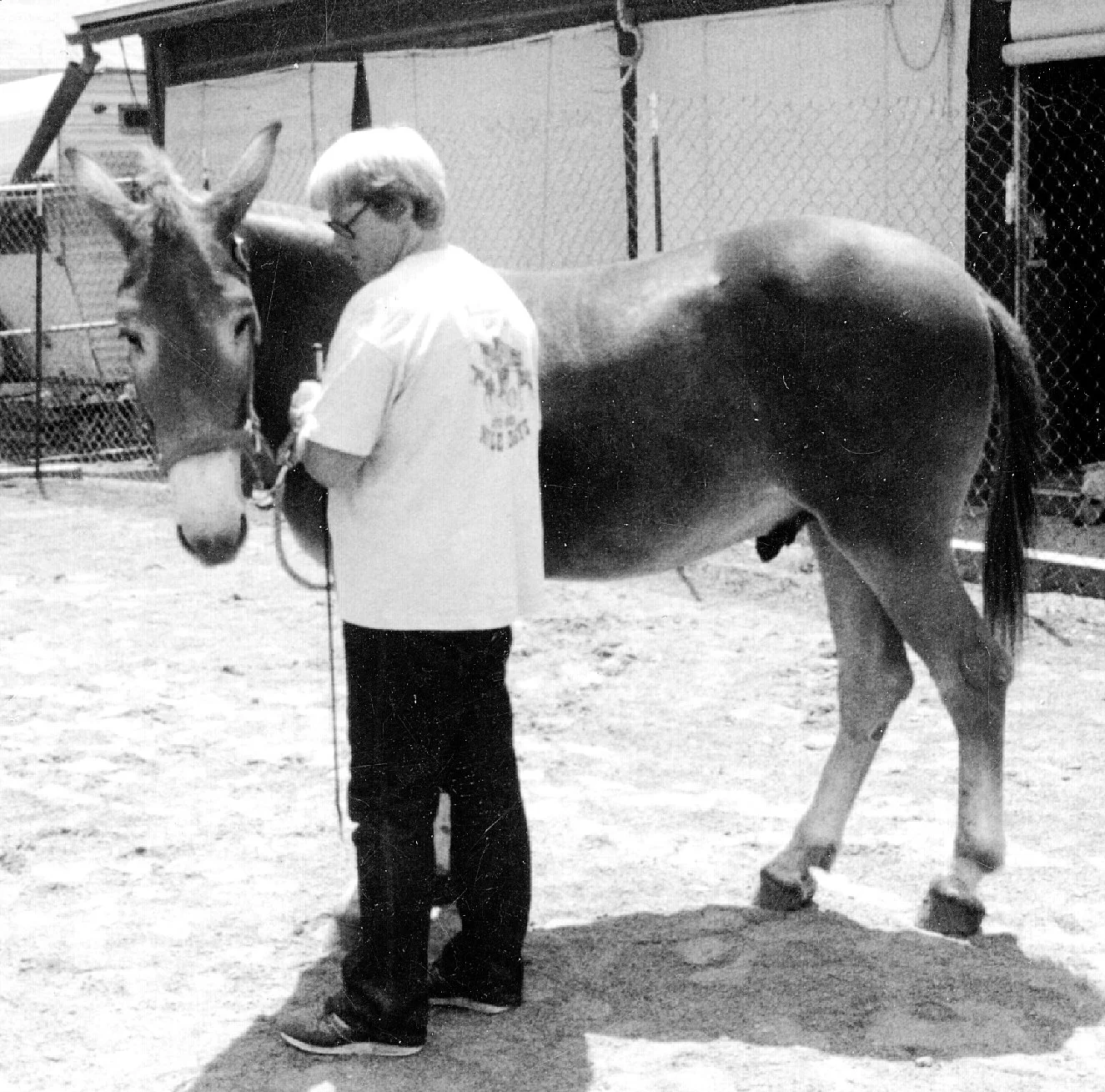
WHEN TEACHING THE “GET OVER”, position yourself in close to the mules shoulder. From this “safety zone” position you can tip his head toward you to off balance him or step in tight and pull his head around you if he acts up, forcing him to circle around you. From this advantage you can usually avoid being kicked or pulled off balance
Everyone enjoys a mule that is responsive and can handily be positioned anywhere its handler or rider asks. In the arena, on the trail or in the barn and even the trailer, there are times when a mule needs to know the command “get over.” It’s also the basis for the turn on the forehand, on the haunches and the sidepass. Teaching this command is easy and can be done from the ground, providing a great way to continue your mules training despite poor winter weather. You don’t need any fancy equipment, just a halter, leadrope, short crop and some treats. When training you should follow a set pattern, like building blocks. Don’t advance until your mule is proficient at each step. Start by getting your mule to respond with one step before asking him to go ten.
To begin teaching your mule to “get over”, start by positioning your mules head so he is facing some type of high barrier, like a tall fence or wall. This will prevent him from moving forward. While training, never tieup your mule, no matter how well broke he is, because he may pull back and you will be creating a bad habit. When you start, if he steps back, go with him, don’t try to hold him in place. He will be confused at first since he doesn’t know just what you want him to do.
Now, standing at his left side, hold the halter with your left hand, let the excess leadrope drape over your arm, off the ground. Place your right hand on his side slightly behind where your heel would reach. With your left hand, tip his head toward you. Push with your right hand and say “get over”, Most likely your mule will just stand there or even lean into your hand. This is not unusual. Most equines tend to lean into pressure until they are taught to move away from it. So, at first, you may have to physically push your mule away. Don’t be afraid to really lean into him and shove. If he takes just one stumbling step away, stop and praise him. When he does this three times on one side, go to the other and repeat the process. He should learn to “get over” from both sides. Until he gets the hang of it, try for just one or two steps each time. Don’t get upset or rush your mule, you are trying to build trust and he needs time to learn new things.
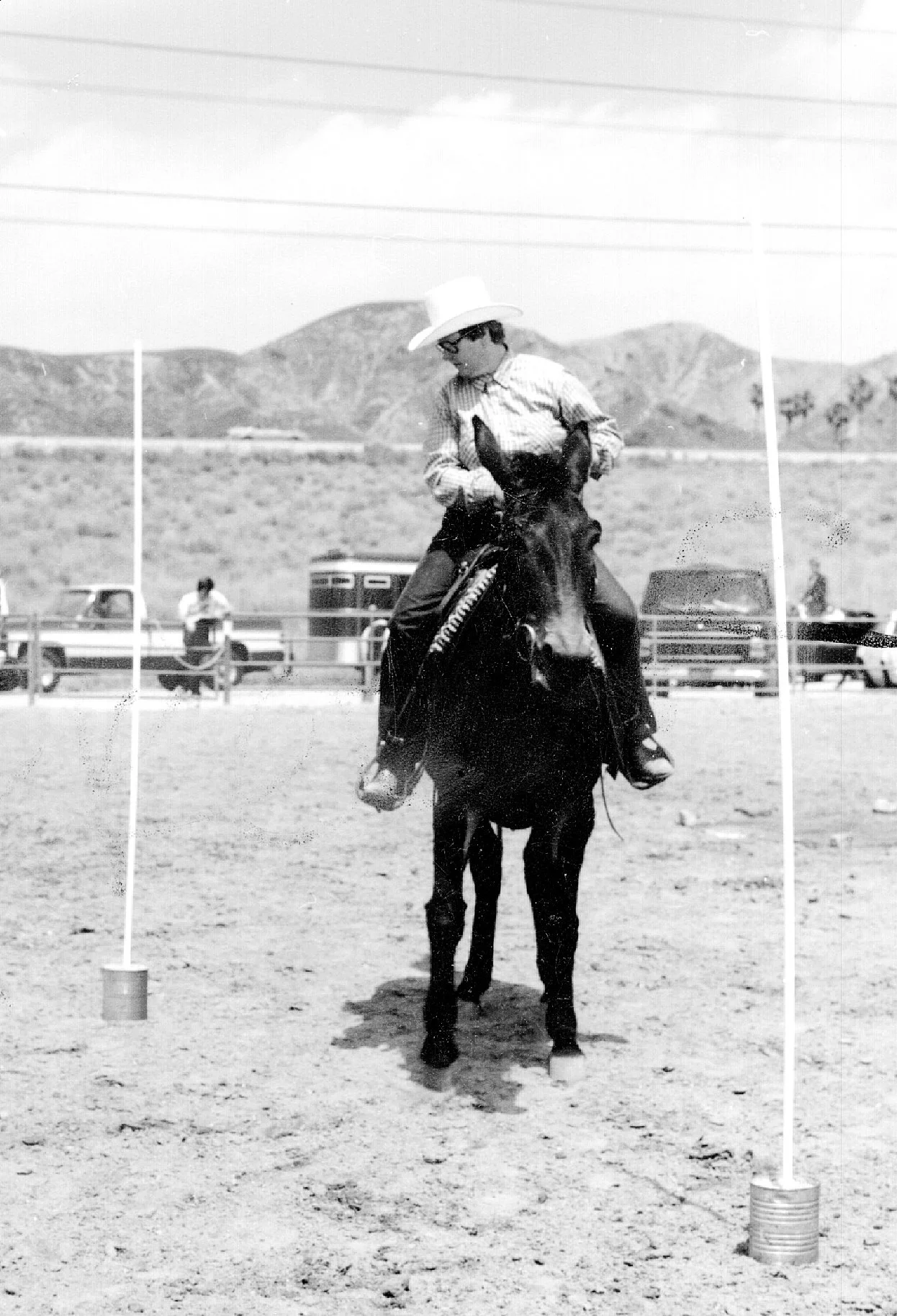
TO SUCCESSFULLY MANEUVER an obstacle like this, you need to have good control of your mule’s hind end. By teaching him to move his rump over on command you can position him anywhere you want.
If he’s really reluctant to move away, try tipping his head more toward you to off balance him. If that doesn’t work, you may, as a last resort, need to use the crop. When using the crop, hold your halter and place yourself tightly near his shoulder. This is a safety zone. Try using your hand and say “get over”. If he doesn’t react, give him a swift hard pop with your crop, say “get over” and pull his head toward you. Demand that he move his rump away from you, but help him by pulling his head to unbalance him. Be alert! He may cowkick, jump back or pull forward. Try again. The instant he moves sideways from you, praise him. If he kicks at you again, stop and get professional help to cure his kicking habit. Yes, habit! If he kicks at you now he will kick again!
In most cases it only takes one or two good quick hard pops from a crop (more noise than anything else) to get your message across. Get rid of the crop as quickly as possible. Remember, when using a crop one or two quick hard pops is correction, anything more is useless beating.
Once your mule is moving away with little hand pressure try using just the end of your leadrope. Gently swing the rope towards his side and say, “get over”. If he doesn’t move, swing the lead hard one time very close to his side and demand he move. You might try pulling his head toward you and taking a step toward his side to help him move.
When your mule has mastered moving away from you, from both sides with slight pressure from the leadrope, the next step is on voice alone. If you have been insisting that he move each time you say “get over”, it shouldn’t take long before he’ll move on voice alone. But to help him, continue pointing your hand toward his side.
The foundation of a “get over” will make it easier for you to work on turns on the haunches, turns on the forehand and pivots for showmanship as well as help him maneuver obstacles in a trail class and help with his trailer loading skills. It also installs the respect and good ground manners expected of a top-class mule.
Teaching basic ground maneuvers to your mule will not only give you something to do over the winter, but will give you the opportunity to learn more about him. By spending time on the ground you’ll have a better understanding of each other and will be well on the way to developing a true partnership.