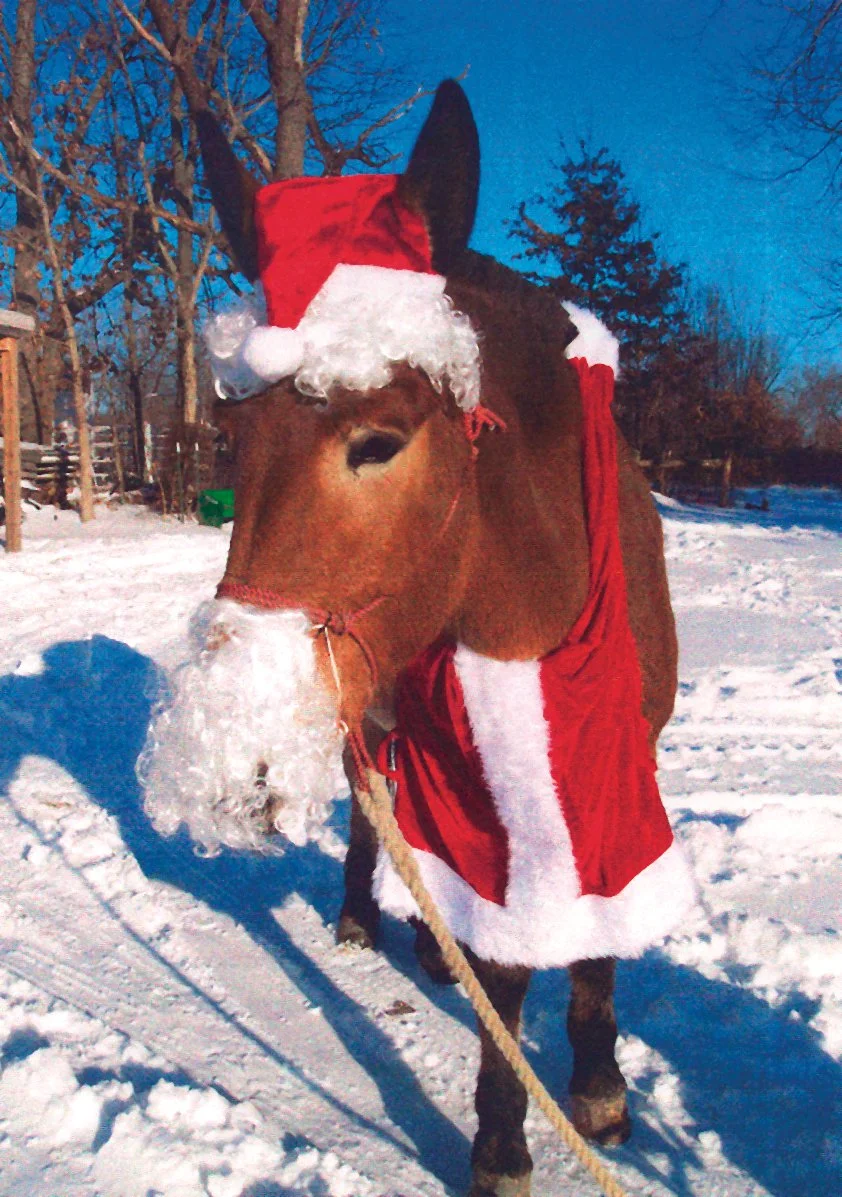
“Lucky Claus” is coming to town, Warner’s Big Ass Acres, Kathy & Rick, Troy, MO (Featured in the November 2007 issue of Mules and More)
By Susan Dudasik
From the December 2007 Issue of Mules and More
The holidays are a time for sharing, and what better way to help the equine community than by doing just that? Locally, nationally, and internationally, there are hundreds of equine-related organizations that are in need of assistance. While all of them can use financial support, many need other things. Equine rescue programs and humane societies are often in need of feed, medical supplies, and halter and lead ropes. They may also need corrals or fence-building supplies, feed or water troughs, and water trough heaters. You might want to check with the individual program, or give them a gift certificate from their feed store or vet. If you’re donating feed, be sure it’s the right brand and type they need.
Youth programs like 4-H and Pony Clubs can always use donations of safety helmets, riding boots, and show clothes. I know many 4-H leaders who check out secondhand shops and yard sales for such items, then personally purchase the items and give them to club members who might not be able to afford them, or put them in a club pool for everyone to use. This is especially helpful when youth are beginning to take an interest in different types of events and need specific clothing. Purchasing these items can be very expensive, especially if the youth only has an opportunity to show once or twice a year at his county fair. But if youth can borrow different styles of clothing and even tack, it will encourage more of them to try a different style of riding and thus make them better horsemen. So, show riders, if you’re getting a new helmet, boots, jacket, or tack this season and your old stuff is in good condition, why not consider donating it to your local youth riding program. Just remember, for helmets, most riding programs require them to meet certain safety standards.
Therapeutic riding programs are often in need of safety helmets, halters, lead ropes, buckets, wheelbarrows, and about anything you can think of that might be needed in the way of first-aid or stable supplies. Many of these programs are funded, manned, and equipped totally on a volunteer basis. Gift certificates from vets and farriers are always welcome, as well as gently used tack.
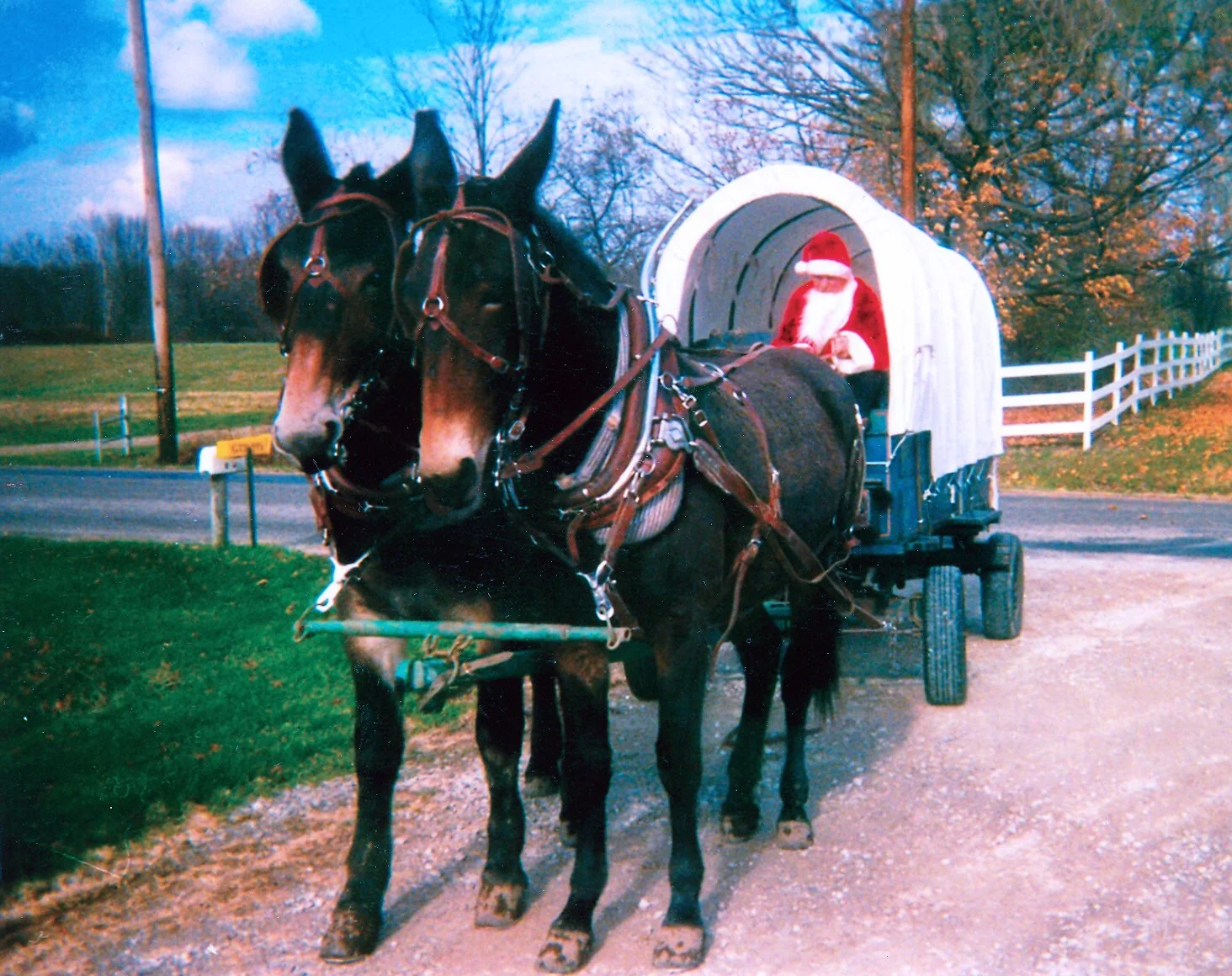
Santa (Mac) driving a team of black mules, M&M Mule Co., Mac McCrary and Scott May, Medina, OH (Featured in the November 2007 issue of Mules and More)
There is another thing all of the above programs are in desperate need of, and that’s you, your skills and your time. Volunteering is a great way to help and there are so many ways in which you can do this. The gift of time is priceless and it may only be an hour or a day; you don’t have to sign up for a weekly or monthly commitment. Many groups host fundraisers or have special events and always need people to help out with them. Even if you don’t have a lot of time, simple things like taking tickets at an event, baking cookies for a bake sale, or hauling equines to an event are great ways to help out. Our local 4-H program hosts a three-day horse camp for about 35-40 youth, which relies on volunteers. Local horsemen, vets and farriers teach classes and the various church groups provide the meals. It doesn’t require a lot of time on the individual’s part, but if these people weren’t willing to volunteer a few hours once a year there would be no camp, which is the highlight of the horse project.
While there are countless equine-related programs on a local level, there are also numerous ones that help equines in general on a national or international level. There are rescue groups that go to disaster areas like fires and floods and set up evac stations for animals. There are equine health research programs, educational programs, groups that are tying to save endangered breeds, youth programs, organizations that are trying to preserve riding trails and equine-keeping areas, and equine welfare organizations. All are in need of assistance through volunteerism, donations of supplies or financial contributions and what better way to experience the joy of sharing this holiday season than by helping those that are helping mules/horses. By giving back to the equine-related program of your choice, you’re not only helping that particular program, but mules, horses and the equine industry in general.
Susan Dudasik is an equine journalist, mule enthusiast and the Idaho representative for the American Trail Horse Association. She’s competed in numerous trail class events, holds clinics and teaches trail classes at various 4-H events. The advice given here is meant only as a guide. A professional trainer should handle any serious mule training problems.