
Breeding Early in the Year
By Carin Smith, DVM
From the January 1999 Issue of Mules and More
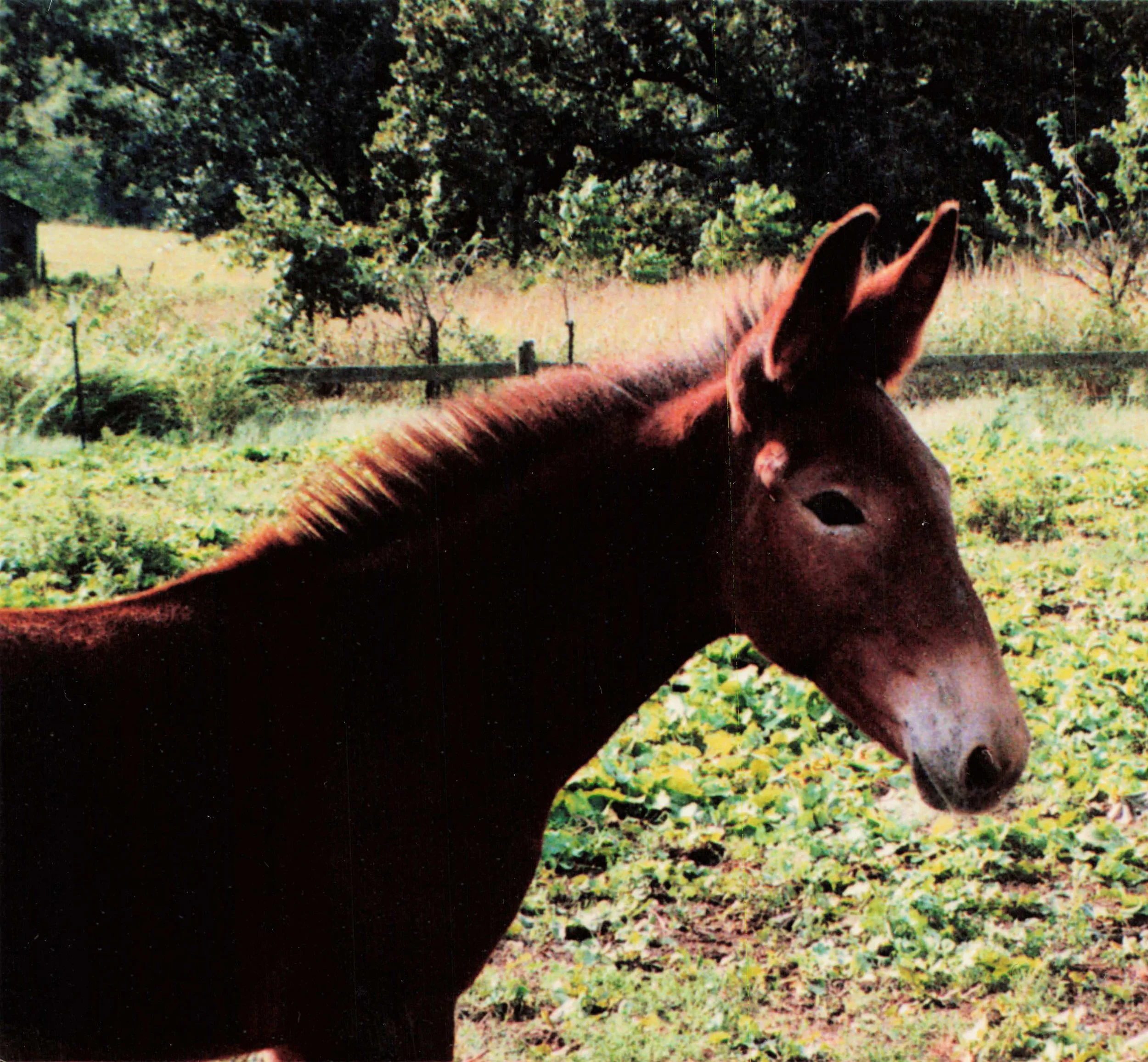
A photo from the January 1999 issue of Mules and More of a red john mule colt out of a Peruvian mare for sale by Spring Valley Mules
Horses have a reputation for being difficult to “settle,” or conceive. Part of the problem is the unnatural schedule we humans have placed on their reproductive cycle. Many people want a foal that is delivered early in the year, so as it grows it can be competitive with others its own age, all of whom are grouped together by the year they are born. To get an early foal, you must breed your mare earlier in the year than is normal for most horses to conceive.
You can make the best of the situation by giving your mare good nutrition, vaccinating to protect her from disease, and by waiting until she is cycling regularly before you have her bred.
Most mares stop cycling each winter. During the early spring, or “transitional period,” cycles are irregular. The mare may not show definite signs of heat and ovulation does not occur predictably. As temperatures warm and days lengthen in spring and summer, the cycle becomes more regular and signs of receptivity more pronounced. The mare enters a transitional stage again each fall.
During the spring and summer, the mare’s cycle lasts about 21 days. The mare is receptive to the stallion during heat, or estrus, which lasts anywhere from 3 to 7 days. Heat is followed by 14 to 18 days of diestrus when the mare rejects the stallion or jack.
Since each mare’s cycle length is slightly different, the best way to determine whether your mare is cycling normally is to keep a record from year to year. That will help you predict when she will come into heat and how long the heat will last. This information is vital to be sure your mare is bred at the proper time.
The transition to normal cycling is influenced by day length. You can create artificial daylight to “fool” your mare into beginning her cycle earlier in the year. Beginning in November and continuing until spring, hang a 200-watt bulb in the mare’s stall. Turn the light on at sunset for several hours to create an artificial 16 hours of “daylight.”
We can safely speed up the progression to normal cycling with various hormonal treatments. However, these treatments only work if the mare has already entered her transitional period. A veterinary exam will determine whether the mare is able to respond to therapy.
Dr. Carin Smith has been a practicing veterinarian since 1984. She is a regular contributor to the Journal of the American Veterinary Medical Association and has written hundreds of articles about equine health care for national magazines. Dr. Smith is the author of Easy Health Care For Your Horse. She lives on a Washington farm and enjoys wilderness trail riding, endurance riding, and jumping.