
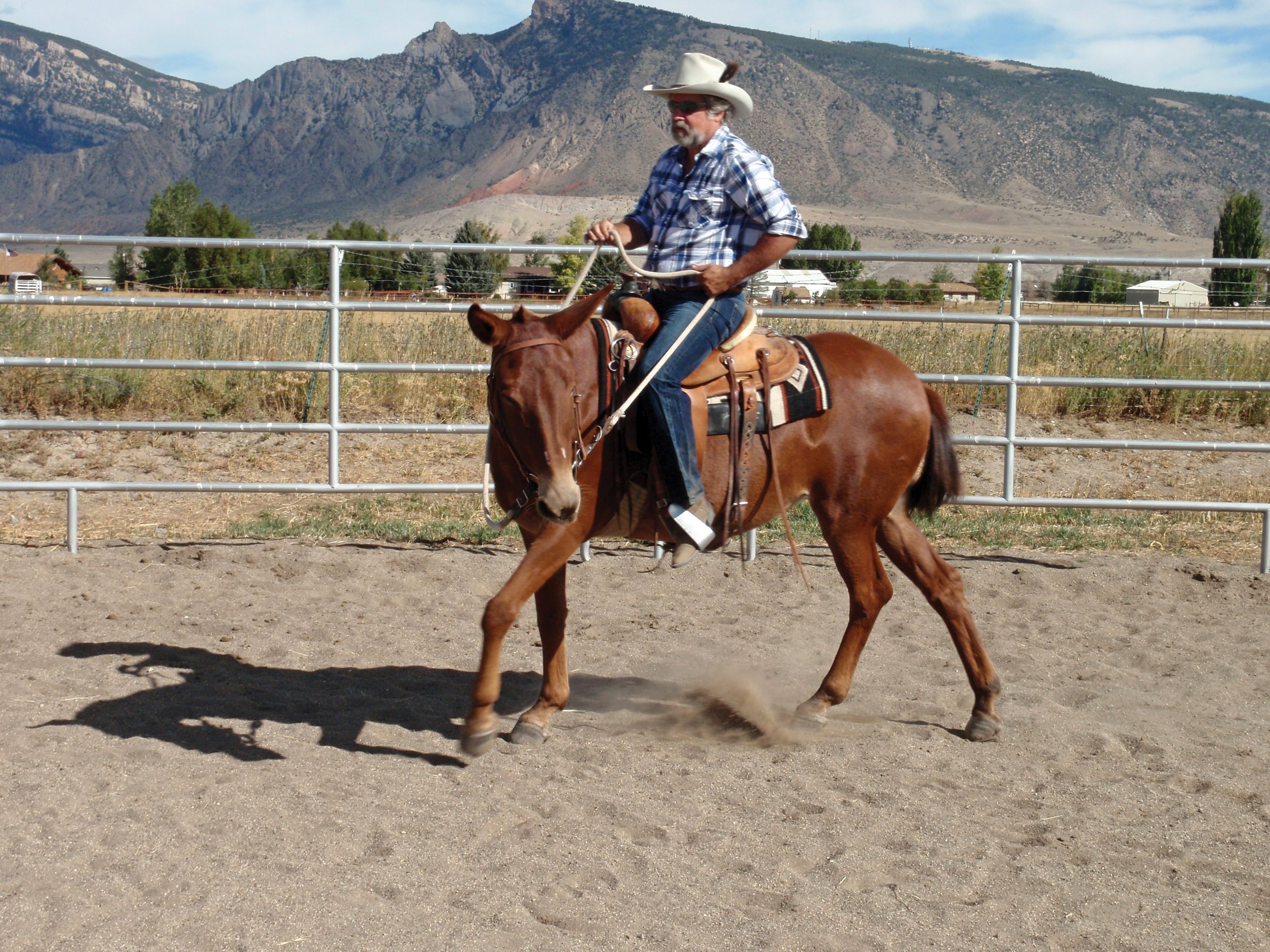
The mule should move his hip if rein pressure is not released after a give
By Tim Doud, Diamond Creek Mules, Cody, Wyo.
From the November 2011 issue
The ability to move a mule’s hip is the most important lesson to teach a mule.
Giving a mule a cue that will move his hip where you ask when you ask is vital. It’s the most important lesson to teach a mule, in fact. You can disengage or engage his hind quarter by connecting the rein to the hip and therefore have complete control of his forward motion. Disengaging a mule’s hindquarters stops his forward motion. This will come in handy to teach a one rein stop or to stop a mule when he runs away under saddle. I can also engage a hip and ask the mule for the correct lead when I ask the mule to lope, or to set up a nice reining spin, or dressage maneuvers such as haunches in.
Every mule that comes through my training program becomes soft and responsive to the bridle. But I do not want the mule taking his head to my knee. That is unnecessary and can actually tear nerves in a mule's or horse's neck, causing long-term damage. When I apply one-fourth of a pound of pressure on the rein, the mule should give to the bit on the side pressure is applied. Keep in mind, I want the give to be between the shoulders of the mule, not overflexed or overbent. In most cases, the mule should not move his head more than a couple of inches off center.
If I am asking for the mule to disengage or engage his hip, I pick up the rein. If the mule gives to the bit and I do not give the mule a complete release of pressure, to the mule, this means that I am asking for more. I am asking the mule to move his hip, not to move his head more. This is called connecting the rein to the hip.
We have all seen a mule running away with a rider and the mule’s head is next to the rider’s knee. This is a mule that flexes his neck well but has not learned to move his hip from the rein. The mule is running through his shoulder and not moving his hip. When a mule runs away with a rider, he has his upper body, head, neck, spine and hip in one straight line.
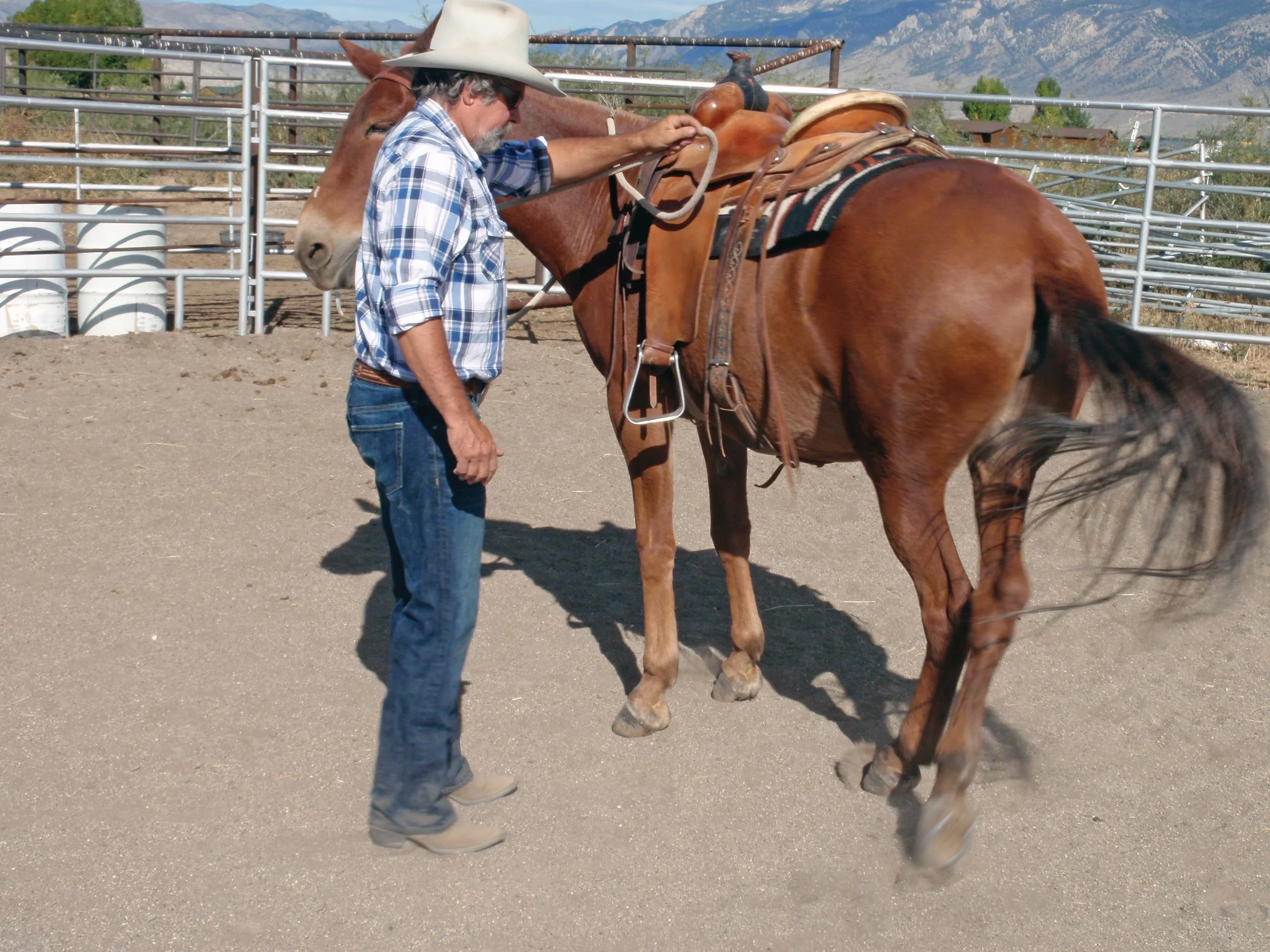
Take the rein to the point of the mule’s hip. When the mule crosses his hind feet, release the rein
By disengaging the hip, moving the hip to the side, we are breaking up that straight line and stopping the mule’s forward movement.
How can we teach a mule to move his hip with the rein?
With the mule in a bridle with a snaffle bit, take the mule to a safe riding area. Remember, it is our job to ride the mule where we can, not where we can’t. I also like to start this lesson on the ground, but you can start this lesson under saddle if you like.
Ask the mule to move forward. As the mule is moving forward, apply light pressure to one rein and ask him to give to the bit. The mule should only move his head a couple of inches off center.
With the mule walking a small circle (to the left, for the sake of clarity) with his nose tipped to the left and no pressure or pull on the rein, we will then ask the mule to move his hip. Move your hand forward on the rein, towards the mule’s nose, and take the rein towards the point of the hip on the mule. Release the rein when the mule moves his hip and crosses his hind legs. Do not release the rein until the left hind leg steps in front of the right hind leg. Give the mule a complete release of the rein. The mule has just disengaged his hindquarters. You have just connected the rein to the mule’s hip.
As with any lesson you teach, you must make learning for the mule fun, not a job. Do not drill the lesson into the mule. Give the mule breaks between requests. When a mule disengages his hip, it is a hard exercise for the mule.
Continue practicing moving the mule’s hip with the rein from both sides until the mule responds 100 percent of the time. Next, I will practice the lesson under saddle.
We must remember that when a mule runs away with a rider, the mule is scared. In this situation, a mule’s performance will drop. We must teach the mule to move his hip without thinking in order to be safe when a mule runs away.
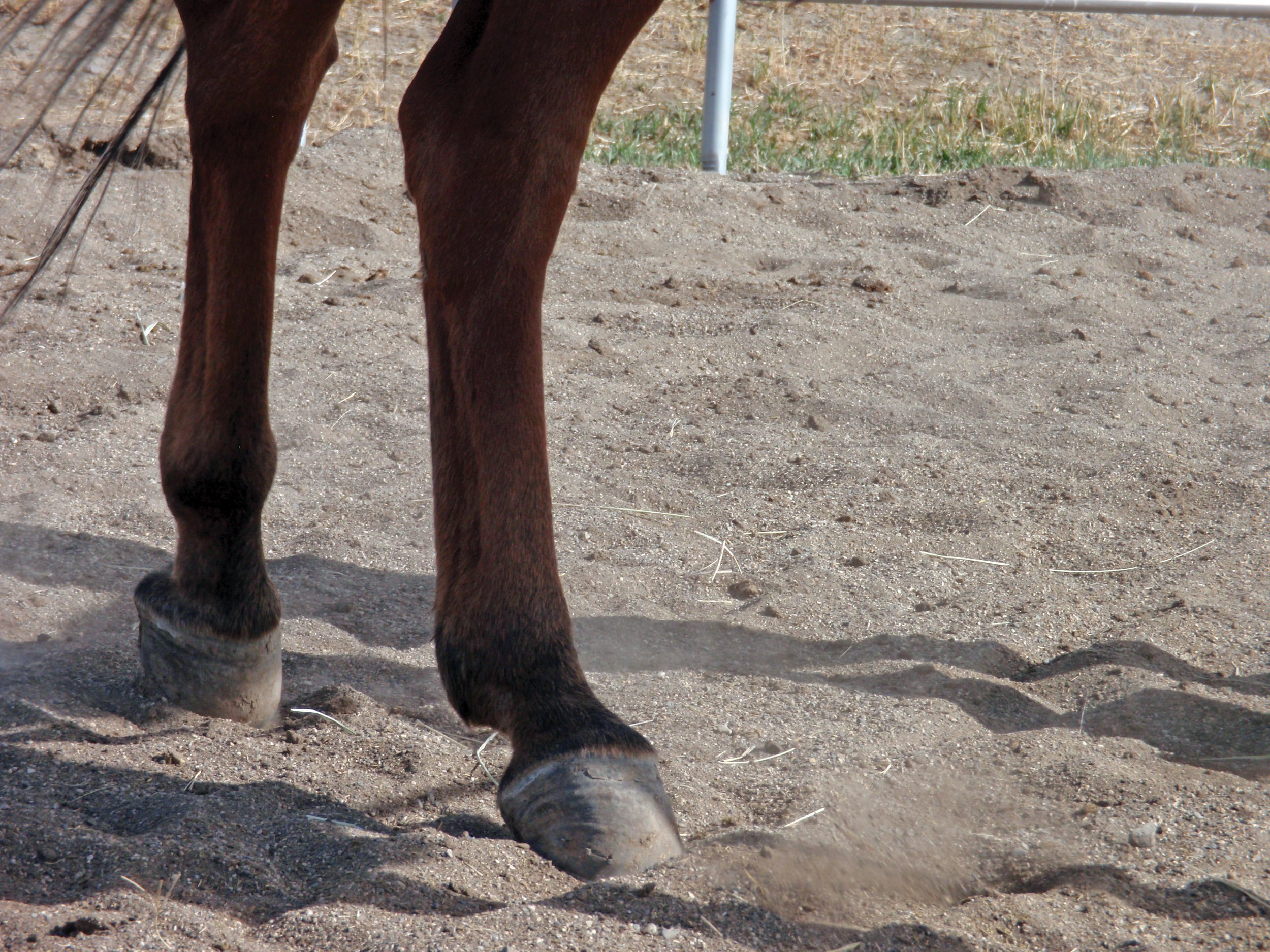
Make sure the inside hind leg steps in front of the outside hind leg before you release
A fun riding lesson to practice connecting the rein to the hip is to place cones around your arena. Ride up to a cone, then move the mule’s hip to the right or left. The mule will make a 90-degree turn.
You are now turning the mule with his hindquarters, like steering a boat. This is called riding the back of a mule.
With lots of practice, you will be able to move your mule’s hip with very little pressure on the rein.
You can reach Tim at www.diamondcreekmules.com or by e mail at bliss@wavecom.net. You can also “like” Tim Doud on Facebook. Tim’s past training articles can be found on his website.